Wednesday, 7 June 2006

Cult or Sect ? (Part 2)


And the results are:

Scientology (C) 81%
Presbyterian (D) 61%
Mormons* (-) 55%
Roman Catholic (D) 48%
Methodist (D) 46%
Assemblies of God (S) 37%
Jehovah's Witnesses (S) 23%
Worldwide Church of God (S) 10%

Which illustrates two things. Sects - like the old WCG which beat the populist drum - tend to recruit people with little formal education. But there are always exceptions (Robert Kuhn springs to mind), and it doesn't mean that most COG members are unintelligent: just that sects appeal less as educational levels rise. But look at Scientology... with 81% of members holding degrees. Sociologists have determined that these groups (cults, as described in part 1) recruit from a quite different cross section of the population - which just proves that a good education doesn't always deliver common sense.

So, in sociological terms, Herb Armstrong built a sect, not a cult. It would be nice to be able to label Flurry's PCG as a cult, if only because it sounds a lot more dangerous than sect (and it is arguably dangerous!) but PCG's pushing of conservative political and cultural buttons is a definite sectarian characteristic. There's neither originality or insight in evidence, only the beating of those same old drums again and again and again, just like an obsessively bored three-year old.

But there's good news too, great news! Flurry's PCG is heading full steam ahead into the trashbin of history, and Gerry shows no signs of hitting the brakes. In fact, Gerry is unknowingly doing all the right things to push his little sect over the cliff in a lemming drive. More on this in part three.

*Note: Mormons were placed outside the three categories as a special case.

Monday, 5 June 2006

Cult or Sect ? (Part 1)


A sect is, as we all know, a moderately deviant group which we have reservations about. A cult, on the other hand, is an aggressively deviant group which may be downright dangerous. Right?

The problem with that kind of definition is that it bogs down in subjectivity. Would you describe UCG, for example, as a cult or a sect? How do you know? What about Flurry's PCG, the Living Church of God or the Missouri Lutherans?

Sociologists, bless them, have come up with a working definition that avoids all the finger pointing. Conventional churches (denominations) are low-tension in relation to the surrounding culture. Not too many demands on members - or cause to raise eyebrows at the Rotary Club. So Episcopalians (or Anglicans) fit right in (except perhaps in New Hampshire).

Sects exist in a higher state of tension with the world around them. They make greater demands on their members, and knowing that Mrs Mcgillicuddy is a Seventh-day Adventist gives you important information about what makes her tick. Sects are similar to conventional churches in lots of ways. But they put the stress on their differences (denominational distinctives) which they value above the shared features.

Cults, according to the sociologists, are of another order entirely. They share very little with the other churches and sects in society. They come in from the outside with strange, alluring ideas that are novel in the host culture. Scientology has arguably less in common with the Episcopalian church down the street than a gathering of Trekkies, and local Baptists are unlikely to find themselves attending a Moonie service by mistake.

Now, here's the interesting part. Sects seem to recruit a quite different group of people to the cults. Sixteen years ago a major survey of American religous affiliations was conducted with a large sample group. Among the things the survey asked about was educational background. So, how would you rank each of the following faiths in terms of percentage of college graduates? Try making your own list with those you think would have the highest percentage at the top, and the lowest at the bottom. They're listed here in alphabetical order. You might also like to write D, S or C beside each (for denomination, sect or cult).

Assemblies of God
Jehovah's Witnesses
Methodist
Mormons
Presbyterian
Roman Catholic
Scientology
Worldwide Church of God

Yes, the WCG - then still a fairly prominent player in the religious marketplace - was included. So, what percentage of college graduates do you think WCG boasted in 1990, and how did sociologists categorize them (us)?

As a bit of a clue, here are the results for 3 other religious groups:

Episcopal (D) 70%
Nazarene (S) 34%
New Age (C) 67%

Answers next time, along with a prediction about the long term viability of Six-pack Gerry's Oklahoma cult... er, sect, um, oh never mind...

(I've taken the information in this series of postings from sociologist Rodney Stark's book, The Rise of Christianity.)

Sunday, 4 June 2006

Dr. Bob Bites Back


It was only a matter of hours before Bob Thiel responded to my previous entry. Courtesy of Gary Scott at XCG, the "Doctor Bob" posting attracted more attention than it otherwise might.

Bob points out that at least one of his articles is indeed extensively referenced, and I thank him for providing the link. What can we learn from Bob's selection of sources?

First, both Dugger & Dodd and the Catholic Encyclopedia were used, as predicted. The first dates back to the 1930s, while the second goes back nearly ninety five years. In fact, the bulk of Bob's references seem to be seriously dated. The earliest I noted was 1885! Most seem to be out-of-copyright material that is now available free online.

Then there are the "in-house" references: LCG booklets, Tomorrow's World magazine, one of Alan Knight's books (a hyper-fundamentalist COG7 lay member with, as far as I know, no qualifications whatsoever in this area), Samuele Bacchiocchi (who does) and the 1950s Radio Church of God Correspondence Course.

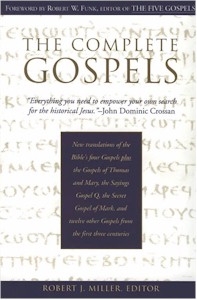
Remove the outdated stuff and the sectarian material and there's not a lot left. Even then, I wonder about some. For example Bob cites (approvingly) a passage from the Gospel of Thomas in The Complete Gospels, a volume published by the Jesus Seminar. Did he realize that?

Bob states: "My articles, as any who read them can tell, are highly documented." One article, especially with these kinds of references, is hardly convincing. Bob then switches tack and lambasts his critics: "it really does not matter much what the anti-COGers choose to believe about what I write. They have never appeared to me to be like the Bereans—they do not seem to have “searched the Scriptures daily to find out whether these things were so” (Acts 17:11)."

The question however is not whether his critics have read the Bible (I'm sure most of us have as good a track record as Bob) but how they read the Bible. Is it just a fundamentalist's treasure trove of proof texts (the way LCG seems to treat it) or something that requires a bit more thought and care.

Bob seems to have sidestepped my suggestion of providing a bibliography on the early church, but I'm happy to provide a brief one of my own. I've listed just 5, all of which concentrate on the first centuries. They come from a variety of perspectives, all the writers are qualified in their field, all are informed by the best current scholarship, and all (with the possible exception of Koester) are written for the non-specialist. Immerse yourself in any one of these, and I think you'll agree that Bob's apologetic approach leaves something to be desired.

Henry Chadwick. The Early Church. London, Penguin Books, Revised 1993. (A little staid, but quite comprehensive)

W.H.C. Frend. The Rise of Christianity. Philadelphia, Fortress Press, 1984. (Very comprehensive, widely regarded as one of the best)

Laurie Guy. Introducing Early Christianity. Downers Grove, Ill. InterVarsity Press, 2004. (An informed Evangelical perspective)

Helmut Koester. History and Literature of Early Christianity. Berlin & New York, Walter de Gruyter, 2000 ed. (More radical and densely argued than most)

L. Michael White. From Jesus to Christianity: How Four Generations of Visionaries & Storytellers Created the New Testament and Christian Faith. San Francisco, HarperCollins, 2004. (Brilliant overview)

Saturday, 3 June 2006

Doctor Bob


According to the latest Journal, Bob Thiel (PhD) has expanded his website to include a section on the Early Church in an effort "to portray Church of God history in a more documented and detailed light." Intrigued, as this is a particular interest I share with Bob, I clicked across to see what he had on offer.

What I found were scores of articles of - and this is my personal and somewhat biased assessment - dubious value and apologetic intent. But what really amazed me was that Doctor Bob was unable to provide a credible bibliography for any of it. No references (except for copious links to his other pages.) I don't claim to have seen everything he's written, so maybe there's an occasional mention of Dugger & Dodd or an online edition of the Catholic Enyclopedia somewhere, but overwhelmingly this is the sole work of one enthusiastic amateur with no specialist training in the field and little evidence of genuine research. But you can judge for yourself

Of course, I'm all for enthusiastic amateurs. Home gardeners for example, and an army of bloggers. But if you're going to set yourself up as an authority on early Christianity, let alone a prolific one, then you need to establish some basic credibility first. At a bare minimum you need to be well read on the subject; at least familiar with the state of the play. Simply regurgitating your own sectarian sources just doesn't cut it.

My challenge to Bob is to provide a bibliography for his site. Books he has actually read and consulted. Then we'll all be in a better position to discuss his ideas.

Saturday, 27 May 2006

In their lifetimes


Fred Coulter certainly has a way with words. For those unfamiliar with the more obscure byways of COG Christianity, Fred is a former WCG minister who went out independently in the late 70s. He is a self-styled scholar, has produced his own New Testament translation, and runs his very own niche COGlet.

Here's a recent slice of Coulter text that took my eye in a full page ad appearing in the latest issue of The Journal: "Did You Know... The Apostles wrote the Gospels in their lifetimes?"

Profound, huh! I mean, if the apostles (was Mark an apostle? was Luke?) indeed wrote the Gospels that bear their names, then they would have to have written in their own lifetimes... wouldn't they? Or have I missed something?

Of course there is always posthumous publication, but I'm guessing that the actual writing usually occurs before the coffin is lowered into the grave... unless Fred is a secret devotee of psychic channelling (but that seems unlikely.)

What Fred seems to be maintaining is that Matthew wrote Matthew, Mark wrote Mark, Luke... but you get the picture. While that seems logical, there are a few pesky facts to take into account.

The Gospels circulated a long time before agreement was reached on who actually wrote them. Nowhere in these documents is there a direct statement of authorship (Hi, I'm John the apostle), and the titles ("Gospel according to...") were added later. Even the author of Luke, who tells his readers up-front that he's writing to Theophilus, keeps his identity to himself. The ascriptions we have are part tradition and part guesswork. Maybe they got it right, maybe not. For example, many early Christians were convinced that John's Gospel was the work of a heretic called Cerinthus. What is certain is that Paul's letters (the seven genuine ones) predate the Gospels, that Mark is the earliest of the four, and that the author of John was a different person to the disciple of that name (though he may have been used as a source).

In trying to defend the truth of the Bible it's all too easy to think the issue is the truth about the Bible rather than the truth which the Bible points to. To get hung up on the former is bibliolatry, and leads to ridiculous claims which in turn undermine the credibility of the Christian message.

But I'm sure Fred will disagree with that... and probably in his own lifetime.

Friday, 26 May 2006

No martyrdom in Milwaukee


In March 2005 the COG community was shocked to its core by the shootings at a Sabbath service in Brookfield, Wisconsin. A small congregation of the Living Church of God catapaulted to international attention when a member, Terry Ratzmann (pictured), opened fire on the pastor, the pastor's family, and people who counted the shooter as a long-time friend. When it was all over seven people lay dead. Terry Ratzmann then turned the gun on himself.

It was a terrible event. The Living Church of God - a small splinter group from the troubled Worldwide Church of God - went into damage control mode. The LCG's autocratic leader, Roderick Meredith, initially seemed more concerned with the PR fallout than compassion, while the leader of the sect that Meredith, Ratzmann and his victims formerly belonged to, Joseph Tkach of the Worldwide Church of God, appeared unable or unwilling even to express the basic civility of condolences. It was almost surreal.

Now one of the survivors has privately published a book about those events, Martyrdom in Milwaukee. Thomas Geiger was there, and his nephew, Bart Oliver, was among the dead.

I want to say that Mr Geiger seems a genuine man, and the experience he relates, along with his son's, deserves to be treated with great respect. But let's be totally clear, the book's title is not accurate.

Martyrs are people who willingly give their lives for their faith. They stand tall against persecution and hatred from outside their community. Those people who lost their lives in Milwaukee were victims of an evil deed; good, decent people cut down in an apparently senseless act. They lost their lives to a fellow believer, not an enemy of their faith or a coercive state power. They were not martrys.

Thomas Geiger gives more than a first hand account; his is also a defense of Meredith's sect. The book's publicity includes this statement: "Learn... how this modern day derivative of the early New Testament Church functions, traces it's roots, and strives to selflessly serve humanity." You have to wonder just how much input the LCG's hierarchy had into this part of the book.

It seems unlikely that we'll ever know exactly what led to Terry Ratzmann's meltdown. What is certain, however, is that Ratzmann saw his church affiliation as pivotal in some way. While it is inappropriate to cast stones following such a horrific event, the church itself has a responsibility to ask some soul-searching questions about its ethos and its apocalyptic message. At the very least LCG (and other related groups) has to look long and hard at the way it counsels those dealing with depression (and reportedly discourages members from seeking outside help.)

There were no martrys in Brookfield that day in March, but there were victims. It will be a further tragedy if the Churches of God refuse to learn from this terrible experience. While Mr Geiger has every right to tell his story, confounding adversity with apologetics is unlikely to provide either enlightenment or a credible account.

Monday, 22 May 2006

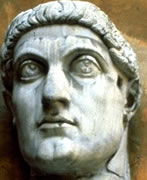
Putting the con back in Constantine


Was Constantine, the Roman emperor who legitimized Catholic Christianity, a good guy or a bad guy. The Da Vinci Code implies the latter, and there's a truckload of COG literature over the years that says much the same as Dan Brown. Constantine was, according to this analysis, either a highly savvy politician bent on manipulating the church to his own ends, or, to cite the most extreme option, a pawn of Satan who succeeded in derailing Truth.

Alastair Kee agrees. This Scottish Presbyterian theologian produced a thorough debunking of Constantine's "conversion" in a book called Constantine Versus Christ (1982). If you're interested in the subject, this is one study that's well worth digging up.

I mention this because the subject of Constantine came up in a recent church history tutorial. After a good deal of to-ing and fro-ing, the lecturer closed off discussion with these words of wisdom (which I'm paraphrasing):

"If we accept that Constantine was a bad man, and his legacy to the church was negative, we have to ask whether the Holy Spirit would or could permit such a terrible thing to occur. I think not."

Driving home that night I tossed that particular thought around. I don't know this man's denominational affiliation, but I assume it's something crashingly boring and conformist. These folk - unlike most readers of this blog - will have assumed that the acceptance of Christianity by the empire was a good thing. We of course, having been inoculated with multiple strains of heresy, know better. Being part of the modern Christian fringe gives one some sympathy for the underdogs of past ages. I find myself invariably rooting for the bit players in church history: Arians, Pelagians, Marcionites, all in the spirit of the bumper sticker that says "I support two teams, New Zealand and whoever is playing against Australia."

But there's a more important point than personal prejudices here. If we say that things can't go horribly wrong because of the Holy Spirit's guidance, then nothing can go wrong. Inquisitions, pogroms, crusades - no problem! If anyone is it blame it's the Holy Spirit. Oh wait, let's not blame the Holy Spirit (Matt.12:31)! No really, everything is just fine.

If that seems a perverse position, the dodgy recourse of wicked Popes and Patriarchs, consider for a moment how some of us responded (or failed to respond) during the last days of Armstrongism. The Pasadena apostle could do as he wanted (and make us do as he wanted) with a shake of his jowls and a threat of "not making it." The flock feared for their salvation if they were unconvinced. Jump? Yes sir! How high? How different is that from regarding Constantine and his episcopal buddies as the voice and choice of God?

I'm with Kee on this, even if it means gritting my teeth and also agreeing with Meredith & Co. Constantine was a shonky con artist who knew how to both flatter and coerce as circumstances required. The church however - or at least the part of it that the emperor adopted as his pet project - was hardly an unwilling partner, and anyone who thinks that slimey symbiosis was heralded with doves and haloes has "swallowed the Holy Spirit feathers and all" (as Luther is reputed to have said).

But lest we feel too smug, it pays to remember the spineless subservience of the dumb sheep to Apostle Herb and his enforcers in our own lifetimes.

Sunday, 21 May 2006

Just James


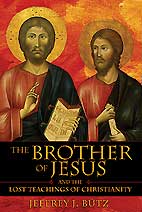
A few weeks ago I reviewed James Tabor's book The Jesus Dynasty. Yesterday I received a courteous email from the author expressing thanks for the effort and describing it as interesting and well done. Say what you like, the man has class! In that review which you can find here there's mention of another book, Jeffrey Butz's The Brother of Jesus.

Butz is a Lutheran minister with a couple of Masters degrees. His discussion of James, Jesus' brother, is well worth reading.

James is long overdue for serious attention in the study of Christian origins. Would Jesus' brother recognize the Messianics, Seventh-day Adventists or United Church of God members as some kind of spiritual descendants? Maybe not. Apart from a couple of surface features like Sabbath observance and dietary restrictions, these groups in their theology actually look a lot more like the churches of the Gentile mission. Despite all the talk about returning to "apostolic" Christianity that Rod Meredith and others spout, modern Sabbatarian Christians are inheritors of 2nd century Catholic theology, scriptures and traditions. James' type of Christianity would look very out of place today, even on a Saturday morning in Charlotte or Cincinnati.

It sometimes seems that the least attractive option, the stolid orthodoxy of the "Church fathers", won out due to sheer bloody-mindedness and pig-headedness rather than any particular virtues. The victors have re-written history, thrown book burning parties and adopted the perverse hangups of Augustine (the blessings of Original Sin!)

Which is why Butz is fascinating. Here is a mainline pastor asking uncomfortable and critical questions. May the Force be with him.

Saturday, 20 May 2006

The Good News and Judas


When the "James ossuary" story broke three years ago, The Good News, flagship publication of the United Church of God, was quick to join the credulous throng of ecstatic apologists. The problem is that stories which seem too good to be true usually are. Although the ossuary still has its defenders, a deep suspicion has since fallen over the authenticity of the artifact.

Contrast the cries of "hosanna" at the appearance of the ancient bone box with the chilly reception the GN team has dished up for the Gospel of Judas. Where the ossuary seemed to confirm Bible believers in the historical accuracy of their faith, Judas threatens to raise impertinent questions and unpleasant facts. But never fear, the GN has it covered!

According to the May/June 2006 issue, the Gospel of Judas was written a century or two after the death of Jesus. It serves "no useful purpose for Christians," and contains "bizarre philosophies" along with "strange and antibiblical beliefs." It is, we're assured, "the product of a strange sect" (!) and "contradicts the record of the authentic gospels..."

Although the Good News report shows the cover of the book published by National Geographic, it seems unlikely any of the lads in Cincinnati have got around to actually reading it. Let's tackle the issue of the dating of Judas for example. While the codex containing Judas dates from the 300s, we know that it has been around since at least 180. That's when one of the earliest "Church fathers," Irenaeus, mentioned the existence of the Gospel. To be widely known in 180, it had to have been around for quite a while. One suggested date is 150, which would make it contemporary with the latest of the New Testament books, 2 Peter.

Of course, nobody is seriously suggesting that Judas preserves an accurate historical account of events. It's a tale told from the perspective of Christians who were ultimately excluded from the emerging Catholic faith. And what makes an "authentic" gospel authentic in the first place? The question of how the canon was formed has always been an Achilles heel for fundamentalists who find fault with church tradition, yet somehow rely on it when it comes to what they accept as scripture.

This is amply demonstrated in the very same issue of the GN, where Don Hooser tackles The Da Vinci Code. In a section called "Truthful Quotes from The Da Vinci Code," Don takes a sideswipe at "mainstream Christianity" and the emperor Constantine. But, hang on a minute Don, why is Constantine a bad guy and Athanasius (who lived at the same time, supported Constantine and brought together the New Testament canon in its current form) a good guy?

Early Christianity basically split three ways. The Jewish Christians, led by James, continued to observe the Sabbaths, circumcision and temple rites. The Catholic Christians took a more radical, inclusive course. And the Gnostic Christians, taking Paul's teachings to an extreme (or perhaps their logical conclusion) meshed their faith with the philosophies of their time and society. The Jewish church and the Gnostics lost the battle for Christian ascendency. Every existing Christian denomination today - including the Sabbath-keeping churches - is descended from the Catholic party that adopted the present canon. Most Jewish Christians rejected Paul's writings. The Gnostics had documents which they regarded as authentic, but because they were such free spirits (in contrast to the hierarchical Catholics) its difficult to generalize about which books they prefered. It's likely that the Gospel of Thomas was more popular, for example, than Judas.

But, mindful of the way "strange sects" operate, the facts are unlikely to make much difference to the editors of the Good News.

PS. My own thoughts on whether the Gnostics were really Christian can be found here

A modest return


In December 2005 I pulled the plug on a long-term project - a website called Ambassador Watch. For 5 years AW covered developments in a small (some might say bizarre) Adventist sect known as the Worldwide Church of God - along with the countless (literally!) splinter groups that have peeled away from the parent body. At the time the site closed down it was more popular than most of the "official" websites representing the beliefs of the various COGs (Churches of God.)

AW is gone. It simply required more time and energy than was possible for one person to give it. The amount of research required was huge, and there are now other fish to fry. So, for what it's worth, this will be a far more modest venture. No "mailbag," guest editorials, or scoops from insiders ... just a blog. While AW was often updated daily, its namesake will be a less obsessive venture. Twice a week... maybe.

As some readers will know (especially if you got here through a link) there is, in addition to this blog, a new website in the pipeline. The focus has, however, changed. Nothing like "son of AW": though it might qualify for third cousin twice removed. It's called Otagosh, and there'll be more about it in a later post.